
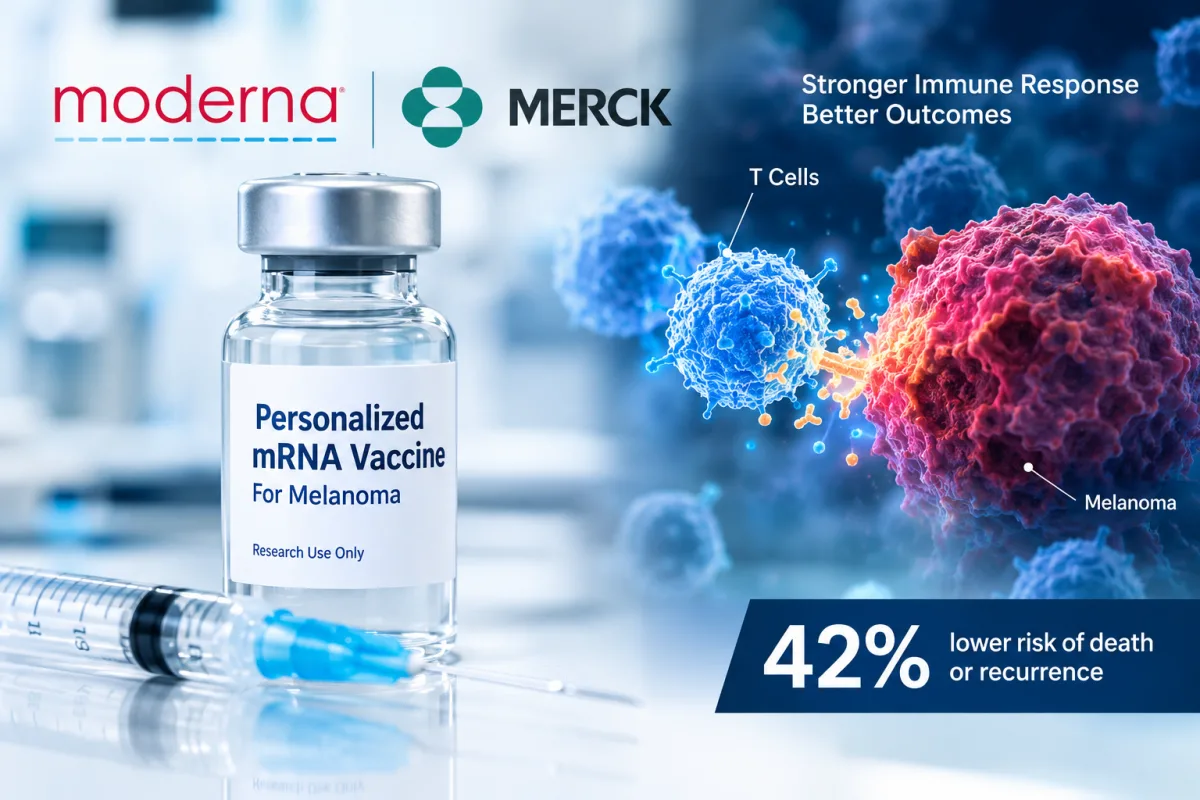
A personalized mRNA cancer vaccine developed by Moderna and Merck has demonstrated promising results in a late stage clinical trial, reducing the risk of melanoma recurrence or death by 42% when combined with standard treatment. The findings highlight the growing potential of personalized cancer vaccines as a new approach to treating one of the most dangerous forms of skin cancer.
The vaccine was evaluated alongside Keytruda, Merck's established immunotherapy treatment. According to the companies, the combination performed better than Keytruda alone, offering new hope for patients with melanoma who have undergone surgery to remove their tumors.
Major Breakthrough in Melanoma Treatment
The trial results represent a significant development in cancer research, particularly in the use of personalized medicine to target individual tumors. Merck and Moderna have begun engaging with regulatory authorities as they work toward potential approval of the vaccine.
Beyond melanoma, the findings could help advance the development of mRNA based cancer treatments designed to stimulate the immune system to recognize and attack cancer cells.
Moderna CEO Stéphane Bancel said the company had long believed that mRNA technology could make it possible to develop cancer treatments tailored to the unique characteristics of each patient's tumor.
He described the latest results as an important milestone for personalized cancer treatment, highlighting the potential of mRNA technology to transform how cancer medicines are developed and used.
How the Personalized mRNA Cancer Vaccine Works
Unlike traditional cancer treatments that may affect a broad range of cells, personalized cancer vaccines are designed around the specific characteristics of an individual patient's tumor.
The mRNA technology provides instructions that help the body produce selected tumor related targets, allowing the immune system to learn to recognize these targets and mount a response against cancer cells.
By tailoring the vaccine to each patient's tumor, researchers aim to improve the immune system's ability to identify cancer cells and reduce the likelihood that the disease will return after surgery.
When combined with Keytruda, which helps the immune system attack cancer cells by blocking the PD 1 immune checkpoint, the personalized vaccine may strengthen the body's ability to recognize and fight residual cancer.
Phase 3 Clinical Trial Involved More Than 1,100 Patients
The Phase 3 clinical trial enrolled 1,137 patients diagnosed with stage IIB to stage IV melanoma. All participants had undergone surgery to remove their tumors before entering the study.
Researchers randomly assigned participants in a two to one ratio to receive either the personalized mRNA vaccine in combination with Keytruda or Keytruda alone.
This study design allowed researchers to compare the outcomes of patients receiving the combination therapy with those receiving the established immunotherapy treatment on its own.
The companies reported that the combination reduced the risk of recurrence or death by 42% compared with Keytruda alone, suggesting that adding a personalized vaccine could provide meaningful benefits for certain patients with melanoma.
However, the reported reduction represents a relative risk reduction, not a 42 percentage point increase in survival. The absolute benefit for individual patients depends on their underlying risk and the duration of follow up.
Scientific Publication and Regulatory Progress
Moderna and Merck initially announced in August that the vaccine had met the trial's key objectives but withheld detailed findings until the data could be presented at a scientific conference.
The results were scheduled for presentation at the European Society for Medical Oncology congress in Madrid, Spain. After the findings were reported early by a medical news outlet, the companies released their headline results ahead of the planned presentation.
The full clinical trial findings were accepted for publication in the New England Journal of Medicine, a leading medical research journal.
Detailed results, including longer term follow up, safety information, and additional measures of treatment effectiveness, will help researchers and regulators assess the vaccine's potential role in melanoma care.
What This Means for the Future of Cancer Treatment
The results add to growing interest in personalized cancer vaccines and mRNA technology as potential tools for treating different types of cancer.
If approved, the treatment could offer another option for patients with high risk melanoma following surgery. It could also provide valuable evidence for researchers investigating whether similar approaches can be adapted to other cancers.
Nevertheless, the findings should be interpreted in the context of the available clinical evidence. Regulatory approval, longer term outcomes, treatment safety, and the practical challenges of producing individualized vaccines will all influence how widely the approach can be used.
For now, the reported 42% reduction in the risk of recurrence or death represents an encouraging development in melanoma research and reinforces the potential of combining personalized mRNA vaccines with existing immunotherapies.
As further clinical data becomes available, researchers will gain a clearer understanding of how this approach could shape the future of personalized cancer treatment.