
Tags: Meta, Muse AI, Mark Zuckerberg, artificial intelligence, AI assistant, Meta AI, AI wearable, AI glasses, Muse Charm, smart glasses, AI technology, Meta Connect, virtual reality
Description: Meta CEO Mark Zuckerberg has unveiled Muse, the company’s new personal AI assistant, along with Muse Charm, a compact wearable device designed to provide faster access to AI through voice interaction. Meta also announced new AI powered glasses and virtual reality hardware as it expands its strategy around wearable technology.
SEO Description: Meta unveils Muse AI and Muse Charm, a compact AI wearable featuring voice interaction, while expanding its smart glasses and virtual reality strategy.
Meta Positions Muse at the Center of Its AI Strategy
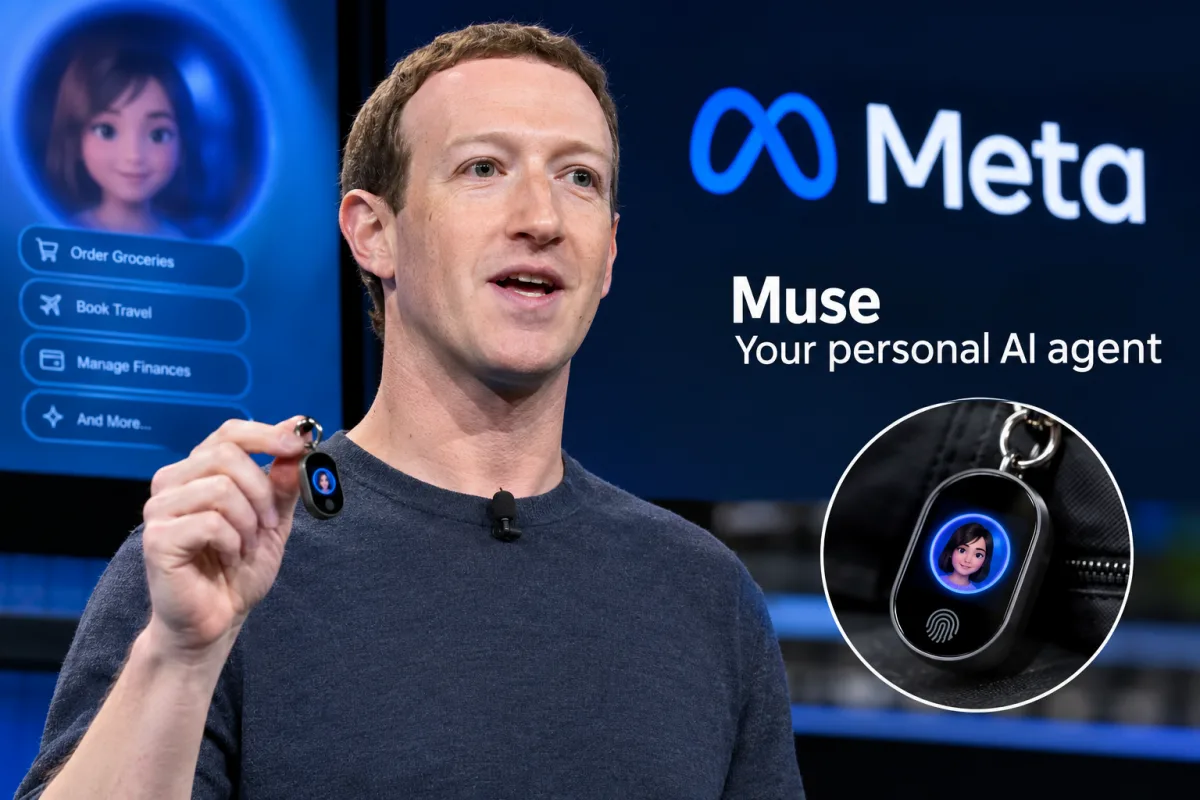
Meta CEO Mark Zuckerberg has presented Muse as a central part of the company’s long term artificial intelligence strategy, unveiling a new wearable device designed to give users faster and more direct access to the AI assistant.
The announcement was made during Meta’s annual Connect event at the company’s Silicon Valley headquarters. Alongside new AI capabilities, Meta introduced Muse Charm, a compact pendant style device that can attach to a keychain and provide users with an additional way to interact with Muse.
The small device includes a display featuring the Muse avatar and uses a fingerprint sensor for activation. It will also support real time voice conversations with the AI assistant, with Meta planning to release the device in December.
Zuckerberg described the device as a particularly fast way for people who are not wearing smart glasses to communicate with Muse and share information about their surroundings.
Muse Expands Beyond a Traditional AI Chatbot
Muse was first reported earlier this year and has quickly become an important part of Meta’s consumer AI strategy.
The application is designed around autonomous AI agents that can assist users with everyday activities. These tasks can include ordering groceries, arranging travel and organizing personal finances.
Meta has also introduced live conversation capabilities for Muse, allowing users to communicate with the assistant through more natural and interactive voice conversations.
The company has emphasized privacy and security as it expands the assistant’s capabilities and prepares to make Muse available across more of its hardware ecosystem.
Meta Faces Pressure Over Its Massive AI Investment
The expansion of Muse comes as Meta continues to invest billions of dollars in artificial intelligence infrastructure, computing power and talent.
The company has faced pressure from investors as it increases spending while competing with major AI companies including OpenAI and Anthropic.
Meta’s stock experienced a significant decline between September and early August, although the company’s market value later recovered following the September 8 launch of Muse. Meta shares were also slightly higher in after hours trading following the Connect announcements.
The success of Muse could therefore become an important test of Zuckerberg’s broader AI strategy, particularly as Meta attempts to bring AI assistants directly into products used by billions of people.
Meta Doubles Down on AI Wearables
Wearable technology remains another major part of Meta’s AI ambitions.
The company has increasingly focused on smart glasses as a way for people to interact with artificial intelligence without relying on a smartphone. Meta’s glasses, developed in partnership with eyewear company EssilorLuxottica, include microphones, speakers and cameras that allow users to take photographs, listen to music and interact with Meta’s AI.
Privacy has remained a major concern surrounding camera equipped smart glasses. Critics have raised concerns that people could potentially be recorded without their knowledge.
The glasses currently include an LED indicator that lights up when the camera is being used to take photographs or record video.
New Ray Ban Options Without Cameras
Meta also announced a new pair of Ray Ban glasses without a camera. The device is designed around audio based interaction, giving users another way to communicate with AI while avoiding some of the privacy concerns associated with camera equipped glasses.
The company also introduced additional frame designs across its Ray Ban and more affordable Meta glasses ranges.
Meta said Muse will soon become available through its smart glasses, expanding the assistant beyond smartphones and dedicated applications.
Meta Introduces New Virtual Reality Glasses
The company also used Connect to announce new virtual reality hardware.
Meta said its new virtual reality glasses will be released next spring for $1,300. The company claims the new device is five times lighter than the previous Quest 3 model.
Meta is also introducing AI powered digital avatars that can represent users during video calls while they are wearing the glasses.
Because the glasses cannot record the wearer’s face directly, the company is using highly realistic digital representations to create a virtual presence during calls.
The technology builds on Meta’s long running investment in holographic and immersive digital experiences.
Meta Wants Muse to Become a Personalized AI Assistant
Meta’s broader ambition is to make Muse increasingly personalized for each user.
The company could potentially use information generated through activity across its social media platforms to help the assistant understand users’ preferences, routines and interests.
That strategy could give Muse access to a broad range of information about how people communicate and use Meta’s services. At the same time, it raises important questions about privacy, data protection and how much personal information users are willing to share with an AI assistant.
For Meta, the combination of Muse, smart glasses and other wearable devices represents a major shift in how consumers could interact with artificial intelligence.
Instead of relying primarily on smartphones and traditional applications, Meta is betting that people will increasingly communicate with AI through devices that are always close at hand.
The success of this strategy will depend on how effectively Meta can combine useful AI features with convenient hardware while maintaining strong privacy and security protections as adoption grows